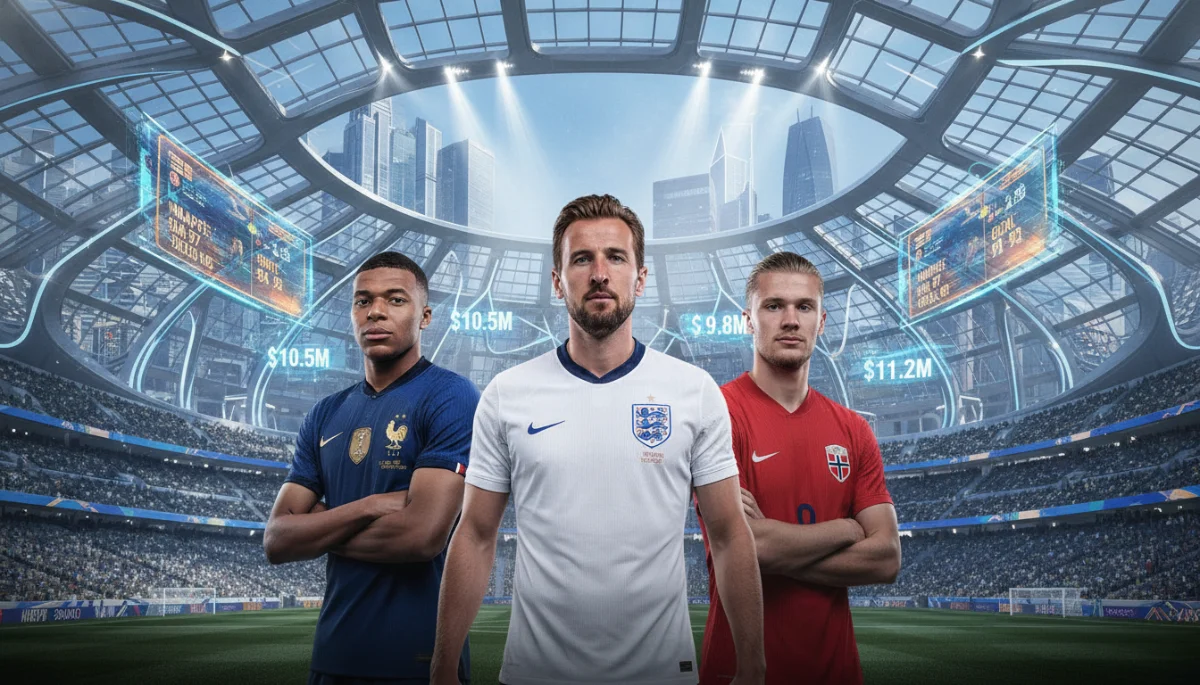
The official fantasy game for FIFA World Cup 2026 has arrived, and it comes with Aramco backing. Fans can now build a 15-player roster, chase points across multiple ranking boards, and try to outthink millions of other managers before the first whistle sounds.

What Managers Need to Know First
The game is built around a classic fantasy setup, but the tournament format gives it a distinct edge. Each manager must assemble a squad made up of 2 goalkeepers, 5 defenders, 5 midfielders, and 3 forwards, all within an opening budget of $100 million. That budget rises by $5 million when the knockout rounds begin, giving teams a little more flexibility when the competition becomes tighter.
Player prices stay fixed throughout the tournament, so early decisions matter. There is no transfer market fluctuation to rescue a poor purchase, which makes pre-tournament planning especially important. The game also limits how many players can come from one nation, with the group stage allowing a maximum of three from any single country.
Transfers, Chips, and Matchday Control
Before the tournament opens on Thursday, 11 June, managers can make unlimited changes. Unlimited transfers are also available ahead of the Round of 32, while the remaining stages use standard transfer rules. During live Matchdays, users can still improve their totals by changing their captain and using bench options wisely.
The booster system adds another strategic layer. Five chips are available across the competition: Wildcard, 12th Man, Maximum Captain, Qualification Booster, and a Mystery Booster that will be revealed before the Round of 32. Used at the right time, these tools can separate a strong week from a great one.
How the Scoring System Works
Fantasy points are tied to real on-field production, so the game rewards both obvious and subtle contributions. Minutes played, goals, assists, cards, own goals, penalties won or conceded, and defensive actions all feed into the final score. Tackles, chances created, and shots on target also matter, which gives more types of players a path to value.
There are also extra rewards for specific moments. Direct free-kick goals earn bonus points, and a scouting bonus goes to a player owned by fewer than 5 percent of managers if that player scores more than four points in a match. That rule makes low-owned picks especially interesting in the right matchup.
| Feature | Details |
|---|---|
| Squad size | 15 players |
| Budget | $100 million, then +$5 million in the knockouts |
| Country limit | Up to 3 players from one nation in the group stage |
| Transfer windows | Unlimited before kickoff and before the Round of 32 |
| Boosters | Five chips, including a Mystery Booster later in the tournament |
The Top-End Prices Set the Tone
Fitting the biggest names into the salary cap will be one of the main puzzles for managers. Erling Haaland, Harry Kane, and Kylian Mbappe sit at the top of the price list at $10.5 million each, while Lionel Messi and Cristiano Ronaldo follow at $10 million. Those numbers make elite attackers tempting but expensive, especially when a balanced squad is still required.
Some defenders and goalkeepers also carry premium tags. Portugal’s Nuno Mendes is the highest-priced defender at $5.8 million, and the standout goalkeeping group includes Ederson, Alisson Becker, David Raya, and Unai Simon. In a format where every dollar matters, even small savings can change the shape of a roster.
Which Nations Shape the Market
Prices reflect the strength of the FIFA/Coca-Cola Men’s World Ranking, and the top six nations dominate the expensive tier. Twenty of the 25 highest-priced players come from those six countries, with England and France leading the way at five premium players each. That concentration gives managers a clear signal about where the most widely trusted fantasy options sit.
Historical note: Kylian Mbappe won the adidas Golden Boot at the FIFA World Cup Qatar 2022™. The award first appeared as the Golden Shoe in 1982 and was renamed in 2010 to honor the tournament’s top scorer, with second and third place receiving the Silver and Bronze Boots.
Value Beyond Europe
The Confederation Challenge Leaderboard adds another reason to search beyond the usual European stars. By tracking how different regions perform based on user selections, it creates a wider incentive to find productive players from every part of the map.
In Africa, Egypt’s Mohamed Salah is priced at $10 million and Omar Marmoush at $7.8 million. In Asia, South Korea’s Son Heungmin sits at $7.4 million, while Saudi Arabia’s Salem Al Dawsari is listed at $7.2 million. Among the host nations, Canada’s Jonathan David, Mexico’s Raul Jimenez, and the United States’ Christian Pulisic are all priced at $7 million. New Zealand’s Chris Wood leads the Oceania pool at $6.5 million and gives managers a reliable route into that region.