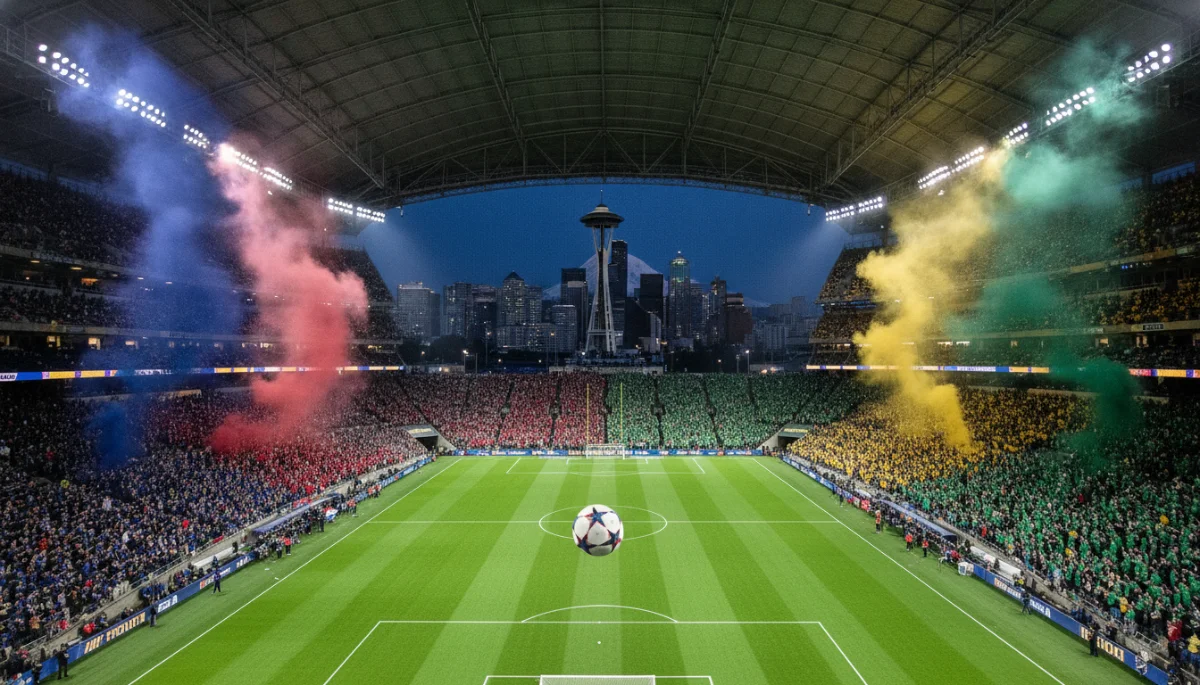
World Cup 2026 | Group D, Matchday 2 — Friday, June 19, 2026 | 3:00 p.m. ET | Lumen Field, Seattle | TSN / CTV
Seattle gets a high-pressure Group D showdown as the United States and Australia meet with first-place implications and a possible route to the round of 32 on the line. Both teams arrived with momentum after opening wins, and the result will shape not only the group table but also the bracket that Canada is watching closely.
For Canadian viewers, this is more than a show match. It is a chance to size up two serious contenders, examine contrasting styles, and see whether the Americans can turn home-field advantage into another step toward the knockout rounds.
Why This Match Matters
The simplest way to frame this game is that both teams have already proven they belong at the top of Group D. The United States opened with a dominant 4-1 win over Paraguay, a result that gave the hosts control of the group and underlined how dangerous their attack can be when it clicks. Australia responded with a 2-0 victory over Türkiye, a scoreline that looked even more impressive once the shot count, possession numbers, and defensive workload were taken into account.
The stakes are straightforward. A win almost certainly sends one side into the knockout stage with confidence and use, while a draw keeps the group tense and leaves the final round of matches with far more pressure attached. That is why this feels less like a routine group match and more like an early elimination test disguised as a Friday afternoon kickoff.
| Team | Opening Result | What Stood Out | Biggest Concern |
|---|---|---|---|
| United States | 4-1 over Paraguay | Fast circulation, strong pressing, and a multi-layered attack | Christian Pulisic’s fitness after leaving with a calf issue |
| Australia | 2-0 over Türkiye | Disciplined defending and elite goalkeeping under heavy pressure | Whether they can keep absorbing waves of American pressure |
The U.S. Shape and the Pulisic Question
Much of the buildup in Seattle has centered on Christian Pulisic, who was excellent in the first half against Paraguay before being substituted at halftime because of a calf knock. Mauricio Pochettino has kept the door open on his availability, but the bigger point is that the U.S. now has enough depth to adapt either way. Tim Weah, Brenden Aaronson, Gio Reyna, and Alex Zendejas all offer different ways to stress a defense, and that variety matters against a compact opponent.
The Americans looked sharp in their opener because the movement was coordinated and the tempo stayed high. Folarin Balogun gave them the direct scoring threat they needed, while the buildup play stretched Paraguay until the game broke open. If Pulisic starts, the U.S. gains another layer of creativity between the lines. If he does not, the pressure shifts toward the supporting attackers to keep the same edge in the final third.
There is also a physical memory attached to this matchup. When the teams met in Denver last October, Australia’s direct and aggressive approach forced Pulisic out early with an injury, and Pochettino has been clear that his side must stay competitive without crossing the line into reckless play. That detail matters because Australia will not be intimidated by the atmosphere or the occasion.
What Australia Brings Into Seattle
Australia’s opener showed a side that can survive long stretches without possession and still punish mistakes. Against Türkiye, the Socceroos absorbed enormous pressure and still left with a clean sheet, helped by a brilliant goalkeeping performance from Patrick Beach. The lesson for the Americans is simple: breaking Australia down may take patience, precision, and a willingness to stay disciplined if the first wave does not produce a goal.
The Australians are comfortable playing without the ball, which makes them dangerous on the counter. Nestory Irankunda brings pace on the wing, and Kusini Yengi showed enough composure in front of goal to make the U.S. cautious about overcommitting forward. If Australia can keep the game tight into the second half, one transition or set-piece moment could change everything.
Their confidence will also be shaped by the idea that they have already handled one big occasion in this tournament. A second straight result against a higher-profile opponent would not only strengthen their own position, it would send a message to the rest of the field that their opening win was no fluke.
Lumen Field Could Tilt the Night
The setting may matter almost as much as the tactics. Lumen Field is expected to feel overwhelmingly American, and the U.S. has built a strong recent record there, winning seven straight at the venue.[orig] Cristian Roldan knows the pitch as well as anyone in the squad, and that familiarity can be useful in a game where rhythm, space, and crowd energy all influence the flow.
Still, a loud home crowd does not automatically solve a compact defensive structure. If Australia settles into its shape early, the match could become a test of patience for the U.S. The longer it stays level, the more pressure shifts to the hosts to force an opening, and that is exactly the kind of situation Australia will welcome.
For Canada, that tension is part of the appeal. This tournament is close enough to home that every major result feels relevant, and the possibility of facing one of these teams later makes this a useful scouting window as much as an entertaining match. The contrast is also instructive: the U.S. is trying to impose itself through possession and pressure, while Australia is trying to turn structure and efficiency into an upset.
Watch Information and Final Read
The match is set for 3:00 p.m. Eastern, with Canadian coverage on TSN and CTV, and French-language viewing available through RDS. Fans can also stream through the TSN App, TSN+, the CTV App, and Amazon Prime Video via TSN, making it easy to follow from anywhere in the country.
The most likely script is a tight opening phase, a long spell of American pressure, and a finishing stretch that asks Australia to defend deeper than it wants. Beach may keep the visitors alive for a while, but the United States has more ways to score and more reasons to keep pushing. Balogun is the most likely difference-maker if the chances come, and the home crowd should amplify every U.S. attack in the second half.
Prediction: United States 2, Australia 0. The Americans should control the match enough to secure qualification, while Australia still leaves Seattle with its reputation enhanced and its path forward very much alive.