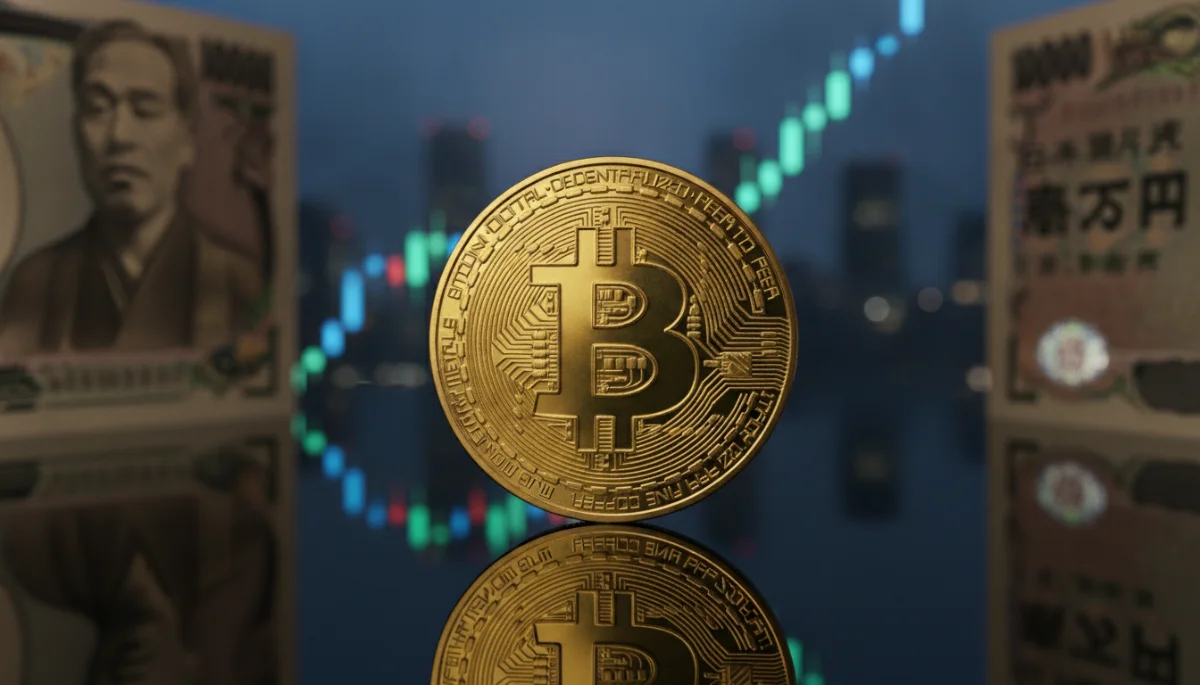
Why the Bank of Japan Kept Rates Unchanged
The Bank of Japan left its benchmark rate at 1 percent, signaling that policymakers want more evidence before tightening further. Governor Kazuo Ueda said inflation is likely to move above the 2 percent target later in the fiscal year, supported by AI-related demand and a weaker yen.
Ueda’s message mattered because it pointed to two separate forces shaping Japan’s price outlook: stronger investment tied to artificial intelligence and currency weakness that makes imports more expensive. The market had already leaned toward a future hike, so the decision did not create a major surprise in trading.
That lack of surprise helped explain why the yen’s brief reaction faded quickly after the press conference. Traders continued to treat the low-rate environment as favorable for the yen carry trade, which allows investors to borrow cheaply in Japan and pursue higher returns elsewhere.
What Crypto Prices Did in Response
Bitcoin held almost unchanged around $63,885, showing that the market had largely absorbed the policy news before the announcement. Ether also remained relatively calm near $1,888, while Binance Coin stood out with a stronger daily rise and a firmer weekly trend.
| Asset | Price | 24-Hour Move | Weekly Move |
|---|---|---|---|
| Bitcoin | $63,885 | -0.07% | +0.5% |
| Ether | $1,888 | -0.62% | +1.0% |
| Binance Coin | $591 | +3.5% | +4.4% |
BNB’s performance suggested that traders were still rewarding assets linked to active blockchain usage and yield opportunities. Bitcoin, by contrast, looked steady rather than euphoric, which is consistent with a market waiting for a stronger macro catalyst.
How the Carry Trade Supports Risk Assets
The yen carry trade can add liquidity to global markets when Japanese borrowing costs stay low. In practice, that capital often finds its way into equities, digital assets, and other higher-volatility instruments, which can support prices even when broader conditions feel uncertain.
- Investors borrow yen at a relatively low cost.
- They convert those funds into other currencies and buy higher-yielding assets.
- When the yen remains weak and rates stay contained, the strategy becomes easier to maintain.
That mechanism helps explain why Bitcoin did not sell off after the Bank of Japan’s decision. The policy stance preserved a familiar source of liquidity, and markets appeared to have positioned for that outcome ahead of time.
AI spending added another layer to the story. As companies push more capital into data centers, compute infrastructure, and related technology, inflation pressure can build while investor interest in growth themes remains elevated. Crypto often benefits when that combination keeps risk appetite alive.
What Traders Were Watching Next
The next key question is whether inflation in Japan continues to strengthen enough to force a change in tone from the central bank. If that happens, the yen could firm, the carry trade could lose momentum, and risk assets might face a different backdrop.
For now, the message from the market is straightforward: Bitcoin is still trading like an asset that can hold its ground when a major central bank chooses patience over urgency. The price action suggests caution, but it does not suggest panic.