A series that could reshape the conversation
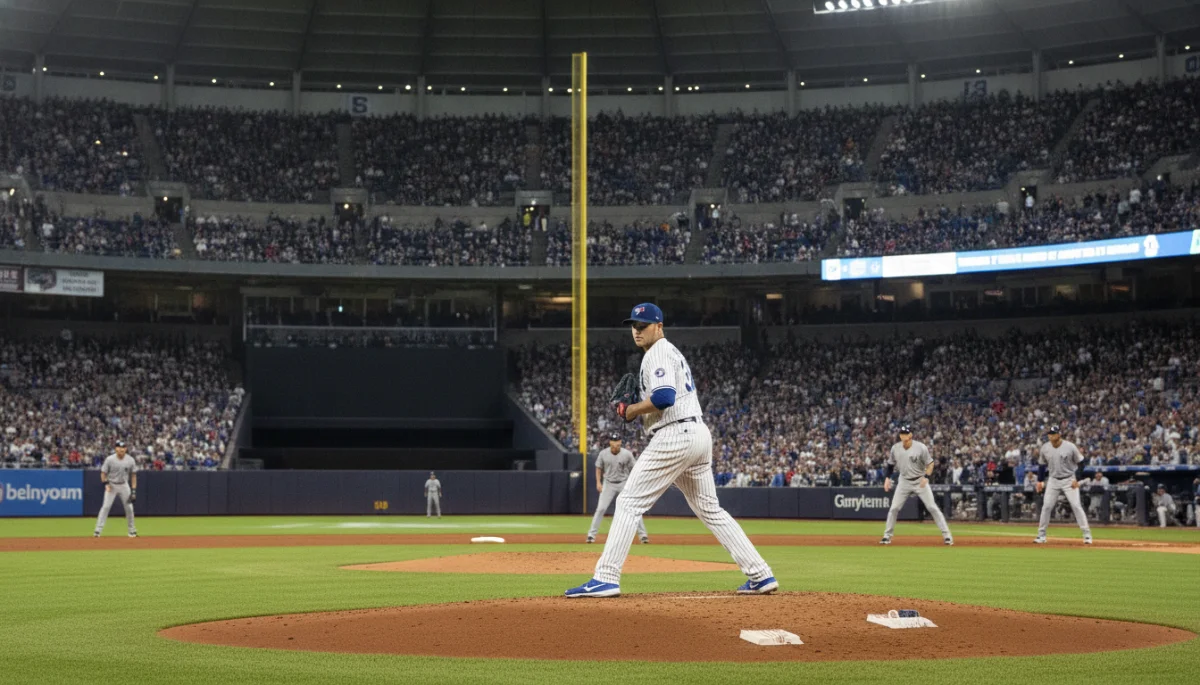
The Toronto Blue Jays return home with a real, if narrow, chance to change the tone of their season. A three-game set against the New York Yankees at Rogers Centre, scheduled for August 14 through August 16, gives Toronto a direct test against a division rival that has looked stronger for most of the year.
Toronto’s record entering August 12 is 58-63, which leaves the club fifth in the American League East. Even so, the race is not finished, and the Blue Jays remain 2.5 games out of an American League Wild Card spot. That gap is small enough to keep hope alive, but large enough to make every series matter.
This matchup matters because it is not just another August assignment. It is a chance for Toronto to prove that a recent rebound can become something more stable.
Toronto has started to move in the right direction
The Blue Jays have done enough over the past week to suggest that the season is not drifting away without resistance. They have won six of their last nine games, with victories over Houston, Philadelphia, and Boston helping them stay within reach of the postseason picture.
That stretch includes consecutive wins over the Red Sox, first by a 2-1 score on August 10 and then by a 5-3 result on August 11. The wins were not flashy, but they were important because they showed Toronto can still handle pressure and find ways to close out close games.
Entering Wednesday, the Blue Jays are 6-4 over their last 10 games. In a crowded race where several teams are clustered near the final playoff positions, that kind of run can quickly change how the standings look.
Toronto does not need perfection to stay relevant. It needs consistency, especially against opponents that can expose weak spots. The Yankees fit that description well.
The offense must keep finding answers
Toronto’s biggest issue remains the same one that has shaped much of the season: run production. The Blue Jays have scored 476 runs this year, and their 115 home runs place them near the bottom of Major League Baseball. Their team OPS has also been among the league’s weaker marks, which puts more pressure on each individual inning.
That reality makes recent wins especially useful, because they show Toronto can score without leaning on one big swing. In the August 11 win over Boston, rookie Brett Bateman drove in two runs, while Charles McAdoo, Ernie Clement, and Myles Straw each helped on offense. The Blue Jays also benefited from mistakes by the Red Sox and made smarter decisions on the bases.
That kind of spread-out production may be the best route against New York. Toronto does not have to become a power-heavy club overnight. It only has to keep moving runners, pressure the defense, and make opponents work for every out.
If the Blue Jays can do that, they can make games against stronger teams much more manageable. If they cannot, the margin for error will disappear quickly.
New York arrives with a deeper resume
The Yankees enter this series in a far more secure position. New York is 67-52, sits second in the AL East, and remains comfortably above Toronto in both the standings and the overall run differential column. Their plus-85 run differential is one of the clearest signs that they have performed at a higher level across the full season.
That does not mean New York is at full strength. The Yankees have been dealing with injuries to several major names, including Aaron Judge, Cody Bellinger, and Giancarlo Stanton. Even with those absences, they remain in firm postseason position and continue to find ways to win games.
They showed that again on August 11, when they rallied for four runs in the seventh inning and beat the Seattle Mariners 4-1. That kind of late push is one reason Toronto has little room to ease up in this series.
When New York is in a game, it can change quickly. That puts extra stress on Toronto’s starters, who will need to avoid early damage and keep the Yankees from dictating the pace.
The earlier meetings still matter
This is not the first time the two clubs have met at Rogers Centre this season. Toronto opened the June series with an 8-5 win, but New York answered with 3-1 and 8-3 victories to take two of the three games. Those results are part of the backdrop now, because they give the Blue Jays a clear reminder of how fast momentum can swing against a stronger opponent.
That history also creates an added layer of urgency. Beating the Yankees once in August would matter. Taking the series would matter more. Either outcome would show that Toronto can compete when the opponent’s roster and record look better on paper.
A sweep would obviously change the mood around the club in a major way, but even two wins would keep the Blue Jays moving forward as September gets closer. For a team still trying to climb back into the race, that is the standard that matters most right now.
Pitching depth will be part of the test
Toronto’s pitching staff is also dealing with a fresh challenge. Right-hander Jameson Taillon was recently placed on the 15-day injured list because of right forearm tendinitis, adding another complication for a staff that already has to be careful with its workload. Toronto acquired Taillon from the Chicago Cubs before the trade deadline, so his absence removes a newer option from the mix.
Against a Yankees lineup that can still punish mistakes, the Blue Jays will need more than a solid start from their rotation. They will also need dependable relief work if the game gets tight late. That combination becomes even more important when the opponent has a history of rallying in the middle or late innings.
The bullpen has recently offered reasons for optimism. Chase Lee earned his first win of the season in relief on August 11, and Spencer Miles picked up his first career save in the same game. Those results may not define the season, but they do show Toronto has some emerging answers if the pressure rises.
For a club trying to stay in the race, those smaller developments can matter just as much as the headline names.
Why this weekend carries real weight
Toronto is not trying to catch the Yankees for the division title. Tampa Bay leads the AL East at 73-46, which leaves the Blue Jays too far back to make the division a realistic target. The more practical path is the Wild Card route, where the standings remain crowded enough to keep Toronto in the discussion.
FanGraphs gave the Blue Jays about a 12% chance of reaching the postseason as of August 12, which reflects both the difficulty of the climb and the fact that the season is not officially out of reach. That number is not encouraging, but it does show that Toronto still has a door open if it can start stacking wins against quality competition.
That is why this series matters so much. The Blue Jays need more than isolated wins over clubs near the bottom of the standings. They need proof that they can win series against teams that are already operating like playoff contenders.
The Yankees offer that opportunity in a very direct way. Toronto has spent much of the year searching for a turning point, and this is one of the clearest chances to create one.
The real question for Toronto
A single weekend will not redeem a disappointing first four months. It can, however, change the direction of the conversation around the team. If Toronto keeps playing cleaner baseball, scores enough without depending on home runs, and gets steady innings from the mound, the Blue Jays can make their season feel alive again.
The series begins Friday, August 14, with games on Saturday and Sunday to follow at Rogers Centre. If Toronto takes the series, the outlook heading into the second half of August will look much brighter. If the Blue Jays stumble badly, the climb back into the playoff race becomes much steeper.
For Toronto, this is about more than trying to beat a familiar rival. It is about showing that the season still has room for a meaningful run.