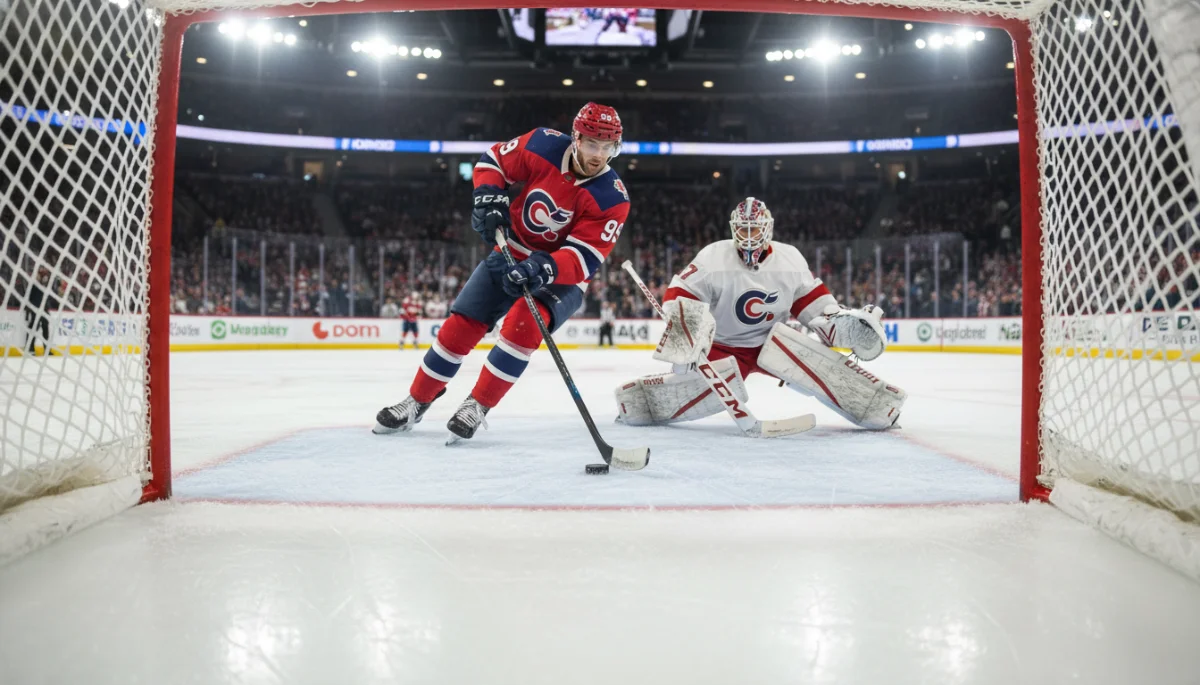
For two rounds, the Carolina Hurricanes looked untouchable. They rolled through the opening stages of the 2026 Stanley Cup Playoffs without a loss and arrived at Game 1 of the Eastern Conference Final carrying all the confidence that comes with an 8-0 run. Montreal had a very different path. The Canadiens came in tired, tested, and hardened by two brutal Game 7 wins on the road. In Raleigh, that contrast produced a stunning result: Montreal won 6-2 and made the series opener feel far less like a chess match than a sudden collapse.
The early storyline was simple enough. Carolina had rested for 11 days, while Montreal had spent the previous week fighting for its life. Most observers expected the Hurricanes’ speed, structure, and pressure to wear the Canadiens down. Instead, the opposite happened. Montreal played with pace, confidence, and precision from the first shift, while Carolina looked a step slow and a beat late in every critical area. In May hockey, that kind of gap can become obvious very quickly.
A First Period That Changed Everything
Carolina struck first, and very early. Seth Jarvis opened the scoring 33 seconds into the game, giving the home crowd exactly the start it wanted. For most teams, that would have been a major problem, especially after such a short turnaround from a demanding series. Montreal, however, answered almost immediately. Cole Caufield tied the game, and the momentum began to tilt. Then Phillip Danault raced onto a breakout feed from Alexandre Carrier and finished cleanly on a breakaway to put the Canadiens ahead 2-1.
Montreal did not ease off after that. Alexandre Texier extended the lead to 3-1, and rookie Ivan Demidov delivered the flashiest moment of the night with a sharp individual move that made it 4-1. The goal came after a Carolina turnover in the neutral zone, and it showed exactly how dangerous Montreal became whenever the Hurricanes lost shape. By the middle of the opening period, the visitors had already turned a tough road start into a control game.
That first period mattered because it exposed a key truth: Carolina’s system only works when its timing is sharp. The Hurricanes try to close space, pressure exits, and force panic. Montreal broke that pressure with quick support, direct passing, and clean zone exits. Once the Canadiens moved the puck out of danger, they found open ice almost instantly. Carolina was chasing the play instead of dictating it.
The Tactical Edge Belonged to Montreal
This game was not just about energy or rest. It was about fit. Carolina’s structure depends on aggressive pinches and sustained offensive-zone pressure. When that approach works, opponents spend long stretches trapped along the boards and struggle to create clean counters. Montreal prepared for that exact style. The Canadiens moved the puck laterally, attacked through the middle, and used speed through transition to make the Hurricanes’ defence turn and recover far too often.
That approach created repeated odd-man rushes and clear looks from dangerous areas. Carolina’s defenders had trouble holding the blue line, and the forwards were not supporting the breakout with the same urgency they had shown earlier in the playoffs. The result was a game that looked messy for the Hurricanes and highly organized for Montreal. Jake Evans later said the Canadiens had their execution in place right away, and that was easy to see. Every clean pass seemed to open another lane.
Rod Brind’Amour did not hide his frustration after the game. He admitted his team was not sharp and said the performance would not hold up at this stage of the season. That was probably the bluntest possible summary. Carolina was built to overwhelm opponents, yet Montreal turned the pressure back on them and made the Hurricanes look uncertain in their own building.
Goaltending Told the Same Story
Frederik Andersen entered the series with playoff numbers that looked outstanding. Through the earlier rounds, he had been nearly unbeatable, posting a 1.12 goals-against average and a .950 save percentage. Against Montreal, though, he faced a defence that failed to protect him and a stream of high-danger chances that kept coming in waves. He allowed five goals on 21 shots and never fully settled into the game.
At the other end, Jakub Dobes steadied himself after allowing Jarvis’s quick opener. Once that first shot got past him, he shut the door. Dobes stopped 24 of 26 shots and gave Montreal exactly what it needed: calm, reliable goaltending while the team protected the lead. Carolina tried to push back in the second and third periods, but the Canadiens never let the game drift back into doubt.
Montreal Finished the Job
Carolina did manage another goal through Eric Robinson, but the Hurricanes never produced the kind of sustained surge they needed. Juraj Slafkovsky ended any real comeback hope with two goals in the third period, including an empty-netter that sealed the final score at 6-2. Nick Suzuki also played a huge role without much fanfare, setting up three goals and driving the offence with control and patience.
After the game, Suzuki kept the message measured. He said the Canadiens wanted a strong start to the series and were pleased with the result, but he also made it clear that Carolina would be better next time. That is the right mindset. One game can swing quickly in the playoffs, but it does not settle a series on its own.
Still, Game 1 sent a loud message. Carolina has been dominant all year, yet its recent history in the conference final remains troubling, and Montreal knows that. The Hurricanes will almost certainly tighten up for Game 2, and Brind’Amour’s group has too much pride to fold after one poor night. Even so, the Canadiens showed that they can handle the speed, the pressure, and the stage. They did not just survive in Raleigh. They took control of the conversation.